Note (3/19/2010): The original post begins with the note just below. It’s centered around Rosh Hashana, but no less relevant at this time of year; I’ll add a post following this one about flour substitutions at Passover.
*******
Note (9/26/2008): A slightly longer version of this article was originally published in Barcelona in 2006. For now, a sweet reminiscence and the best sponge cake recipe you will ever find, anywhere. Period.
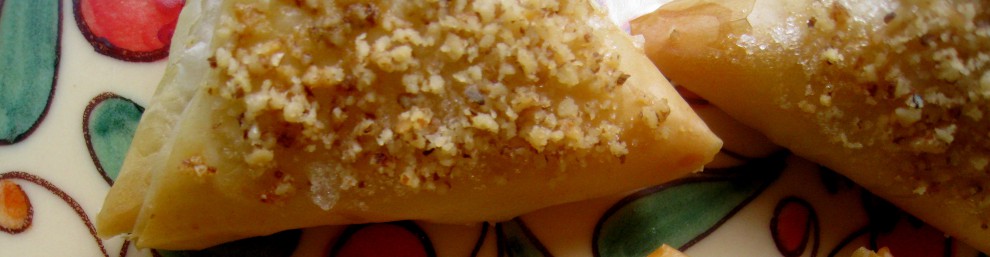
Among the elements included in the meal at Rosh Hashana are fruits and syrups, to symbolize the hope for a sweet year ahead, and things round or coiled to symbolize the cycle of life. Autumn fruits – figs, quince, apples, dates, sweet grapes and sour plums may all make their way to the table in various guises to play these roles, joined inevitably by honey. In Ottoman-Sephardic tradition, fresh fruit is served alongside nut cakes and pastries soaked in syrup: pinyonate, travados, tishpitti, kadaif, baklava. These were all dishes my great-grandmothers made, and my grandmother, too, but that I grew up only hearing about and didn’t learn to make until well into adulthood. In our family, the dessert of choice has always been my mother’s sponge cake.
Food – really good food – is a key component of Sephardic family life. Preparing it, eating it, analyzing it, sharing techniques, improving how we make things, but sticking like glue to the traditional flavors which, in our case, come mostly from the Island of Rhodes. Before every holiday the women all start phoning and e-mailing to see who wants to make what. We plan menus, swap recipes, and from one year to the next may take turns at preparing every dish except one: the sponge cake. This is strictly my mother’s territory, and no celebration in our home is complete without it. No matter how many other desserts there may be on the table, no birthday, no holiday, no special occasion goes by without her superb and simple pandespanya with its roots, like ours, in Sepharad. It’s her signature dish, made with love, always there and always welcome, like another member of the family.
Mind you, Mom has been known to tinker with the recipe. For my brother’s second birthday party, she iced the cake in chocolate and told the kids it was made from real sponges and covered in mud. No one touched it except my brother, who knew better and got to eat a lot of cake. At Passover she uses matza cake meal instead of regular flour, although one year when Passover coincided with my niece’s birthday, she begged grandma to make her a real sponge cake, not a “fake” Passover one. But Suzette is her own harshest critic, comparing each cake to the last one she made and making sure she doesn’t deviate too much from such a winning – and traditional – recipe. As a family we’re also very attuned to its nuances, but every time we eat one we all swear that it’s the best one she’s ever made, and in that moment it really is.
Circular, tall and golden, the inside is moist and yellow from egg yolks and fresh orange juice, with a delicate sweetness and seductive texture that render it addictive. Handled with care it can rise in the oven to six inches – impressive for a cake with no leavening. When we were very young children and my mother a very young (and fairly neurotic) housewife, each time she put a sponge cake in the oven we had to be quiet for an hour while it baked. “No slamming doors!” she would say. “Don’t make any loud, banging noises! Talk in a whisper!” as if even our voices might cause the fragile cake to collapse. My sister always figured Mom had just wanted an hour’s respite from three rambunctious kids, but when I reminded my mother not too long ago of her sponge cake baking routine, she said, “I did that?” and assured me she hadn’t been as clever as my sister assumed. Then she mused “Boy, was I a jerk,” and we had a good laugh.
My own first attempt at making Mom’s pandespanya was so disastrous I declared myself an incompetent baker and didn’t even try it again for another 28 years. That second attempt was only very recently, on the occasion of a big family reunion (what else?) in Los Angeles. Alas, disaster struck once more. It rose quickly, promptly collapsed and was seriously overdone after only 30 minutes. To my horror, my cousin served it anyway. When I returned home from L.A. I made one more attempt, still clouded by jetlag but determined more than ever to succeed. Which I did, and beautifully. I was so excited I called my mother in New York to give her the good news. “How many eggs did you use?” she asked. “Orange or lemon?” “How long did you keep it in the oven?” “Did it come out of the pan easily?” She was pleased, and so was I. At eighty years old she could finally breathe easy about passing the torch.
Every culture develops its traditions slowly, over time, and each family adds its own personal touch. I make the syrup and nut desserts now, and my niece is learning to make them also. Each is delicious and well worth repeating but, having skipped a generation in our family, we’re still rediscovering them. It’s too soon to think of them as “our” traditional Rosh Hashana sweets, even if they once were and will no doubt be again. But the sponge cake? Of Judeo-Spanish origin, imbued with its own sweet, cherished traditions and very much representing for us the cycle of life, Suzette’s sponge cake is equally at home on our Sephardic table at Rosh Hashana as it is on any other special day. And while I wait for the nuts and syrup to regain their place in our family’s gastronomic repetoire, I know that every time I make my mother’s sponge cake – for the rest of my life – I will be reminded of a lifetime’s worth of happy occasions shared with those I have loved the most.
recipe

 SEPHARDIC FOOD